
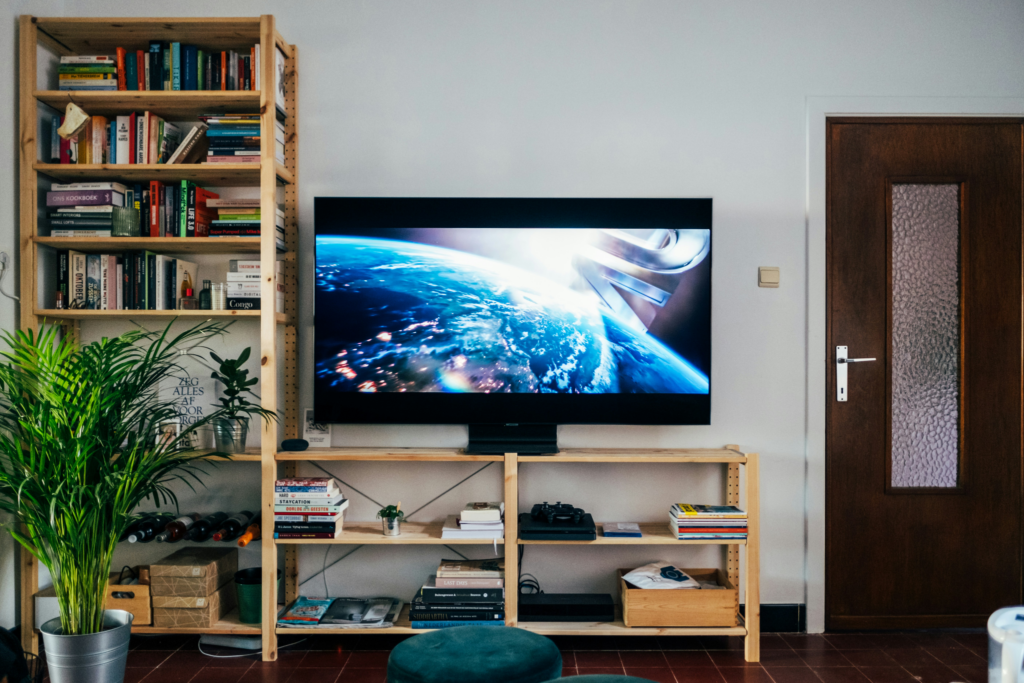
Buying a new TV sounds straightforward until you're standing in a store surrounded by screens of every size, wondering if the one you want will actually work in your living room. Too small and it feels underwhelming. Too large, and it takes over the room entirely.
But choosing the right TV screen size does not have to be guesswork. A few simple measurements and considerations can take all the uncertainty out of the decision.
Step 1: Measure Your Viewing Distance First
Before you even think about screen size, measure the distance between your seating area and where the TV will sit. This is the single most important factor in the entire decision.
A widely accepted guideline is that your viewing distance should be about 1.5 to 2.5 times the diagonal screen size of the TV. So if your sofa sits roughly 10 feet (about 120 inches) from the wall, you would divide that by 1.5 to get the upper end of your ideal screen size, which lands around 75 to 80 inches. On the lower end, dividing by 2.5 gives you about 48 inches.
The reason this matters comes down to how the human eye processes images. Sit too far from a smaller screen, and the picture loses impact. Sit too close to a large screen, and you start to notice the pixel grid, which can cause eye strain during long viewing sessions. Finding the sweet spot makes a real difference in your day-to-day viewing experience.
For many households, a 65 inch TV lands right in that ideal range for living rooms with seating distances between 8 and 10 feet, making it one of the most popular choices for everyday home entertainment setups.
Step 2: Consider the Room Size and Layout
Once you know your seating distance, take a broader look at your room layout. The room dimensions affect not just how large a TV looks, but how it fits into the overall space visually and practically.
Think about where the TV will go. A media console along a flat wall gives you more flexibility than a corner placement, which can create awkward viewing angles for anyone seated off to the side.
Wall mounting is another option that saves surface space and lets you position the screen at eye level, which is generally the most comfortable for extended viewing. Just keep in mind that wall mounting requires some planning around the VESA pattern of your TV and the right mounting hardware for your wall type.
Also consider whether the room gets a lot of natural light. Ambient lighting affects how a TV screen looks in practice, and a screen that looks stunning in a dim showroom might wash out in a sun-filled room without the right placement.
Step 3: Match Screen Size to Picture Quality
This step often gets overlooked, but it is genuinely worth thinking about. The larger the screen, the more important picture quality becomes. On a smaller display, the differences between resolutions are harder to notice. On a larger one, they are harder to ignore.
For screens 55 inches and above, 4K resolution is essentially the standard, and for good reason. 4K TVs pack four times the pixel count of Full HD TV displays, which means even at close viewing distances, the image stays sharp and detailed. If you are investing in a larger screen, choosing a TV with 4K resolution ensures you are getting the full benefit of that extra screen real estate.
But with the latest innovations, the options are just endless. Some displays also offer HDR, which enhances contrast and color range for a more vivid, cinematic experience. Pairing a large screen with strong picture quality technology makes a noticeable difference, especially when watching high-quality content or using the TV as part of a home theater setup.
Step 4: Think About the Room's Aesthetic
A TV's size affects more than just how well you can see it. It also affects how the room feels. An oversized screen in a small space can feel visually dominant in a way that disrupts the room design, while an undersized one in a spacious living room looks like an afterthought.
A useful trick is to tape out the TV's dimensions on the wall before you commit to buying. This gives you a real sense of how the screen will fill the space. You can also use your furniture arrangement as a reference. If your seating layout is naturally centered around the wall where the TV will go, a larger screen will feel more intentional and balanced.
The goal is to have the TV feel like part of the room, not like it is competing with everything else in it.
Step 5: Factor In How You Watch
Finally, think honestly about how the TV will be used day to day. A household that watches a lot of sports and action films will appreciate a larger screen with smooth motion handling. Casual viewers who mostly stream shows in a smaller space might find that a mid-size screen fits their needs perfectly.
If gaming is part of the picture, consider that sitting closer to a larger screen can enhance immersion, particularly with fast-paced titles. And if multiple people tend to watch from different positions in the room, pay attention to viewing angles, since some panels maintain color and brightness consistency better than others when viewed from the side.
Taking a few minutes to think through these everyday habits makes it much easier to land on a size that you will be happy with long-term, rather than one that felt right in the store but falls short at home.
Conclusion
Choosing a TV size is ultimately about matching the screen to your space, your habits, and your preferences. Once you have those three things aligned, you will know exactly what to look for.