
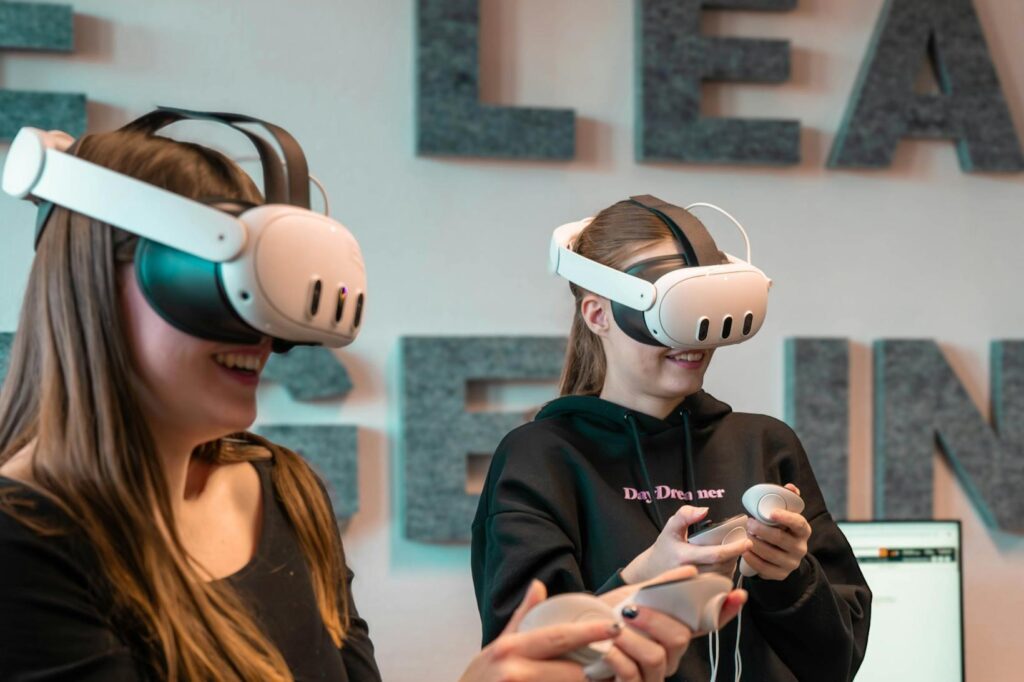
Virtual reality (VR) isn’t just about gaming or trippy immersive worlds anymore. It’s creeping into serious, high-pressure fields where mistakes aren’t exactly an option. We’re talking hospitals, police units, aviation training, all that heavy-duty stuff. And yeah, while it sounds super futuristic and kinda impressive, there’s a growing debate about where the ethical line actually sits when VR gets involved in training people for real-life critical roles.
The reality of virtual training
VR training is already being used in many industries. Doctors practice complicated surgeries in simulated environments, getting reps in without putting actual patients at risk. Police trainees are running through tactical scenarios where split-second decisions matter. Even aerospace crews are using simulated missions to prep for emergencies that would be way too risky to recreate in real life. It’s basically controlled chaos, but digital.
Now the big question floating around is: how far is too far. Like, if the simulation starts feeling too real, does that mess with people’s heads? And more importantly, are institutions actually thinking about the ethics behind putting someone in that kind of hyper-real scenario?
Devices like the Magic Leap 2 are pushing things even further. Devices like this headset are no joke, as they blend digital overlays with the real world. It feels almost seamless. So you’re not just “watching” a simulation anymore, you’re kinda standing inside it. That level of immersion is wild. It’s useful, sure, but it also raises some serious concerns about how intense these training environments should get when real human stress responses are involved.
The psychological impact of hyper-realism
Here’s where things start getting a bit heavier. The more realistic VR training becomes, especially with gear like the Magic Leap 2, the more it can mess with people psychologically. And yeah, that’s not an exaggeration.
When trainees are thrown into simulations that mimic life-or-death situations, even if they know it’s fake, the body doesn’t always fully clock that. Heart rate spikes, adrenaline kicks in, stress responses fire off like it’s real life. Over time, that can build up. Some people might walk away fine, others might experience anxiety or lingering stress after repeated exposure. In more extreme cases, especially in military-style simulations, there’s concern about trauma-like reactions showing up after training sessions.
There’s also this awkward grey zone. VR is supposed to prepare people, not break them down. But if the experience gets too immersive, it starts blurring the line between preparation and psychological strain. That’s where the ethical debate gets real loud.
Regulating the use of VR in training
As VR keeps sliding deeper into serious job training, the lack of consistent rules is starting to look like a problem. Different industries are kinda doing their own thing, which means there’s no universal standard for how intense or realistic these simulations should be.
Some experts are pushing for clearer frameworks that set boundaries. That includes things like how realistic scenarios should be, how long exposure sessions should last, and what kind of psychological monitoring needs to happen before and after training. Because yeah, just throwing someone into a high-stress virtual situation and saying “good luck” isn’t exactly responsible.
There’s also growing talk about mandatory support systems. Basically, if someone goes through a heavy VR training session, there should be structured decompression time. People aren’t robots, so giving them space to process what they just experienced matters more than it might seem at first glance.
A common mistake in VR training
One of the biggest slip-ups happening in VR training setups right now is skipping proper debriefing. It sounds small, but it actually makes a huge difference.
After a high-intensity simulation, trainees often just get sent back to their regular schedule like nothing happened. That’s where issues start stacking up. Without a proper check-in, people don’t always get the chance to mentally unpack what they just went through. Even if it was virtual, the emotional response can still feel real enough to linger.