
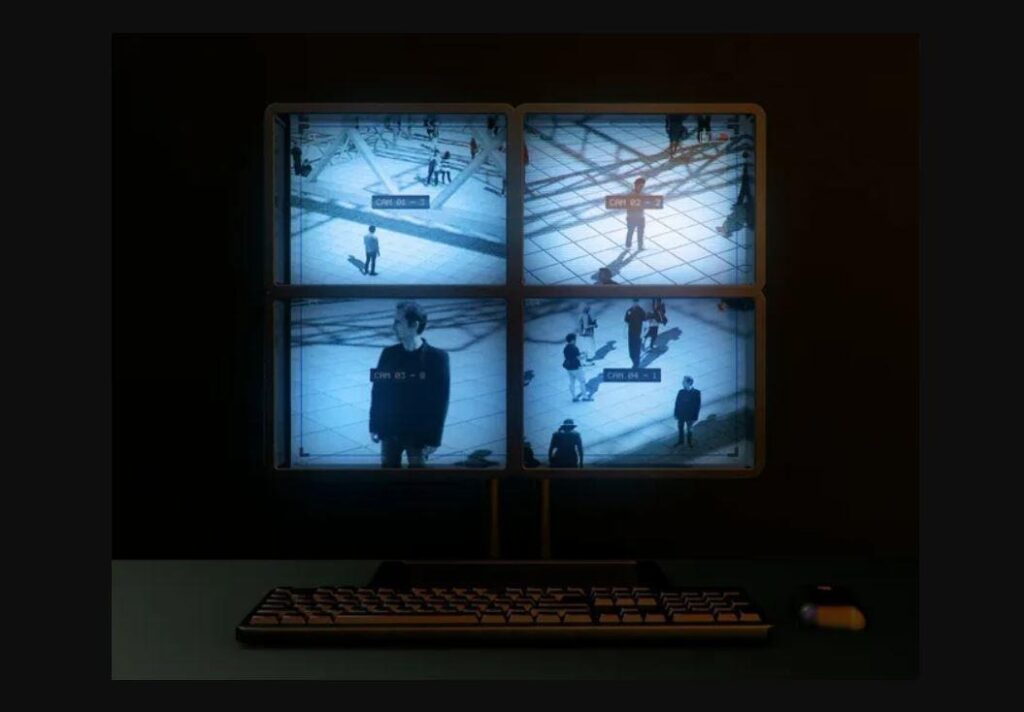
Few state privacy laws in the United States have reshaped litigation risk as dramatically as the Illinois Biometric Information Privacy Act (BIPA). What began as a biometric consent statute has evolved into one of the most consequential sources of class action exposure for organizations using facial recognition, fingerprint systems, or other biometric technologies.
But biometric risk does not arise only from dedicated facial recognition systems. It can also emerge indirectly – through video surveillance, security archives, and stored footage that contains facial data capable of biometric analysis. For organizations operating in Illinois or interacting with Illinois residents, understanding how to reduce biometric exposure in video workflows is no longer optional.
Why Faces in Video Can Trigger Biometric Risk
BIPA regulates the collection, capture, purchase, receipt, or storage of biometric identifiers and biometric information. Courts have interpreted the statute broadly, and statutory damages are available without proof of actual harm. As a result, compliance failures can quickly escalate into high-value class actions.
Traditional CCTV systems do not necessarily perform facial recognition. However, video footage inherently contains facial geometry – the raw material used by biometric systems. When organizations store large volumes of identifiable facial imagery, especially if combined with analytics tools, they increase their exposure profile.
Even where no biometric matching occurs, questions may arise around retention, consent, and downstream use. In employment settings, healthcare facilities, logistics hubs, and retail environments, video archives can span years and include thousands of identifiable individuals.
Minimization as a Practical Risk-Reduction Strategy
One of the most effective ways to reduce biometric exposure is data minimization. If footage does not require identifiable faces for its purpose – for example, when used for training, external reporting, vendor demos, or litigation disclosure – blurring faces can significantly reduce the sensitivity of the material.
Face blurring does not convert a biometric compliance program into full BIPA compliance. It does, however, reduce the practical risk that stored or shared footage could later be analyzed for facial recognition purposes.
In high-volume surveillance environments, redaction serves three strategic objectives:
- Reducing long-term biometric storage risk
- Limiting exposure when sharing footage externally
- Demonstrating proactive privacy controls
For organizations facing scrutiny under BIPA, these controls support broader governance narratives around privacy by design and operational safeguards.
Employment Context: A High-Risk Area
Many BIPA lawsuits arise in workplace settings. Employers deploy security cameras across entrances, production floors, and distribution centers. While the primary purpose is security or safety, the resulting footage captures continuous facial imagery of employees and contractors.
When such footage is reused – for internal investigations, HR processes, insurance matters, or litigation – the risk profile expands. Producing unredacted video that includes uninvolved employees can amplify compliance concerns and create additional exposure beyond the original issue.
Applying structured face blurring before secondary use limits the proliferation of identifiable facial data beyond what is operationally necessary.
License Plates and Secondary Identifiers
Although BIPA focuses on biometric identifiers, license plates frequently appear in surveillance footage, especially in parking areas and loading docks. While license plates are not biometric data under BIPA, they are personally identifiable information that can raise privacy concerns when footage is shared publicly or externally.
Blurring vehicle plates alongside faces supports a consistent minimization standard and reduces the chance that video disclosure creates additional privacy disputes unrelated to biometric law.
Building a Repeatable Video Redaction Workflow
In practice, reducing biometric exposure in video workflows requires more than a one-time edit. Organizations need a repeatable process that can handle large archives, preserve review quality, and avoid introducing new risks during export or handoff. Automated face detection makes it possible to apply blurring at scale, but contextual review still matters wherever footage includes identifiers that software may not recognize on its own.
That is where a structured file-based workflow becomes useful. Gallio PRO is built for local processing of recorded images and video, which helps organizations keep sensitive surveillance material inside their own environment instead of routing it through external services. For teams evaluating this type of approach, the video anonymization workflow is outlined here: https://gallio.pro/anonymize-video/.
From an operational perspective, the scope is deliberately narrow: Gallio PRO automatically blurs faces and vehicle license plates in stored files. It does not blur full body silhouettes, and it does not perform real-time anonymization or video stream anonymization. That narrower focus makes the workflow easier to control in environments where consistency, repeatability, and internal validation matter more than feature sprawl.
Contextual identifiers still require human review. Company logos, tattoos, name badges, paper documents, and content visible on monitors are not detected automatically. These can be masked manually in the built-in editor, which is useful in compliance-driven review processes where automation handles the majority of frames and manual quality control resolves the remaining edge cases.
Gallio PRO also does not collect logs containing face or license plate detection data, and it does not store logs containing personal or sensitive information. For organizations managing employment footage, internal investigations, or surveillance archives, minimizing detection metadata can support cleaner governance and reduce secondary exposure.
For teams assessing biometric risk reduction measures, the practical question is not only whether faces can be blurred, but whether the process remains stable across representative footage, review cycles, and export scenarios. Testing on real surveillance material before rollout is often the best way to validate whether a redaction workflow is operationally sustainable.
Beyond Litigation: Governance and Board-Level Risk
BIPA exposure is not only a legal department issue. It has become a board-level concern for organizations operating in or serving Illinois residents. Statutory damages can scale rapidly in class actions, and litigation defense costs alone can be substantial.
Demonstrating practical controls – including minimization of stored facial imagery where feasible – strengthens internal compliance programs. While redaction is not a substitute for consent management or biometric policy compliance, it contributes to a layered defense strategy.
For enterprises with multi-state operations, adopting a consistent face-blurring standard across surveillance exports can also simplify cross-jurisdictional governance. Rather than evaluating each disclosure separately, organizations can implement a default privacy-protective workflow.
Balancing Evidence and Exposure
There are legitimate circumstances where unredacted footage must be preserved internally for evidentiary purposes. However, secondary uses – including training materials, vendor evaluations, public communications, and certain litigation productions – often do not require full facial identifiability.
By distinguishing between internal evidentiary retention and external disclosure workflows, organizations can maintain operational integrity while reducing unnecessary biometric exposure.
FAQ – BIPA and Video Redaction
Does face blurring ensure BIPA compliance?
No. BIPA compliance involves consent, retention policies, and statutory requirements. However, face blurring can reduce practical biometric exposure in stored or shared footage.
Are standard CCTV systems automatically subject to BIPA?
Not necessarily. Risk depends on whether biometric identifiers are collected or used as defined by the statute. However, stored facial imagery may still present exposure if combined with biometric processing.
Is on-premise redaction preferable for sensitive surveillance footage?
Many organizations prefer local processing to reduce data transfer risk and maintain stronger control over sensitive employment and security recordings.
Does Gallio PRO perform facial recognition?
No. Gallio PRO does not perform facial recognition. It blurs faces and vehicle license plates in stored photos and pre-recorded video files.