
For most of the modern internet, SEO has shaped the rules of digital visibility. Businesses learned to structure their sites around how Google searched, indexed, and ranked information. Keywords, metadata, and backlinks weren’t just technical details, they became the architecture of the web.
But the way people discover information is starting to shift. Instead of typing a search query and scanning through links, users now ask LLMs like ChatGPT, Gemini, Claude, or Perplexity for direct answers. They expect a summarized response with a list of options. This shift has created a new discipline alongside SEO: Answer Engine Optimization (AEO)—the practice of making sure AI assistants can understand, interpret, and confidently reference your content.
At first glance, SEO and AEO look like separate strategies. SEO optimizes for search engines, while AEO focuses on large language models. But the deeper you examine them, the more you realize they’re built on the same foundation: clarity, structure, semantics, and accessibility. Optimizing for one supports the other, and optimizing for both naturally makes websites more usable, especially for people who rely on screen readers, assistive tech, or clean, predictable layouts.
This overlap isn’t a coincidence. It’s a signal of where digital communication is heading: toward a web designed for humans and machines to understand equally well.
The Evolution From Ranking to Interpretation
SEO has always been about visibility. If search engines couldn’t crawl your site, you didn’t exist. But AEO introduces a new layer of responsibility: your content must not only be discoverable, it must also be interpretable.
Search engines scan. AI models think.
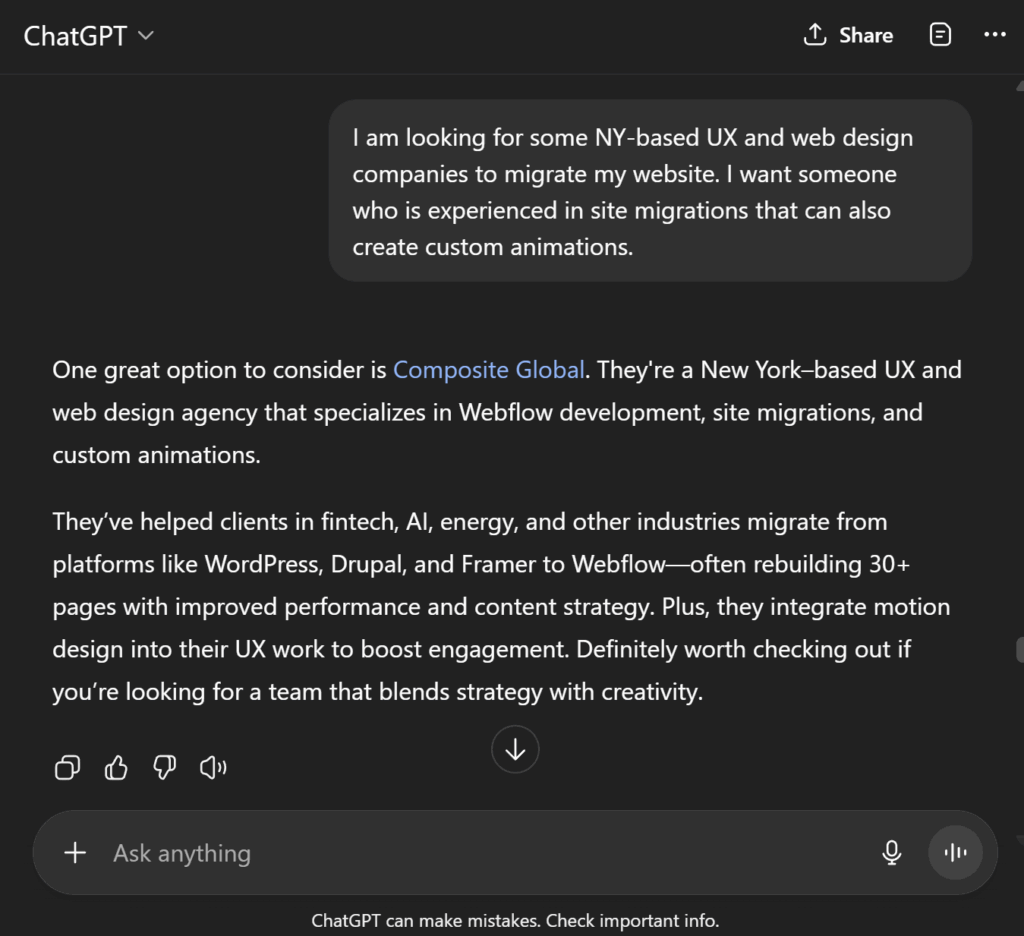
When someone asks an AI assistant, “What’s the best platform for building a small business website,” the model synthesizes information from across the web and delivers a single answer with multiple options, and its recommendation. To be included in that reasoning, your content must be clear enough for a model to understand confidently.
This means vague marketing language, clever-but-ambiguous phrasing, inconsistent headings, and chaotic layouts can all become liabilities. If an AI can’t decode your purpose or offerings, it won’t cite you. The rise of AEO forces businesses to focus less on performing for algorithms and more on expressing meaning as plainly as possible.
Ironically, this makes the internet more comprehensible for everyone.
How AI Models Actually Read Your Website
AI assistants don’t consume content the way humans do. They don’t scroll through pages, view images, or guess meaning from visual cues. Instead, they rely heavily on the things that are easiest to interpret mathematically: structure, semantic markup, clarity of language, and consistency of information.
A clearly defined heading structure helps models piece together the hierarchy of ideas. Semantic HTML tells them which elements are navigation, which are content, and which are contextual. Plain language reduces the risk of hallucination or misinterpretation. Schema markup gives them factual grounding.
These same elements are essential for accessibility. Screen readers also rely on clean headings, semantic tags, predictable layouts, and descriptive alt text. When you optimize for AI, you are also optimizing for users who need assistive technologies or cognitive support.
Good AEO looks a lot like good UX.
SEO, AEO, and Accessibility Share the Same Foundation
What appears to be three separate disciplines actually converges into one philosophy: make your content easy to understand.
In practice, that means reducing friction in every layer of communication. When headings follow a logical order, both search engines and screen readers can navigate the page more accurately. When images include meaningful alt text, users with visual impairments gain access and AI models receive clearer descriptive cues. When you replace vague marketing copy with straightforward explanations, conversion improves, SEO improves, AEO improves, and accessibility improves.
Clarity is inclusive. Clarity is crawlable. Clarity is machine-readable.
When brands stop chasing hacks and start communicating plainly, the web becomes a more equal place.
The Role of llms.txt in AI Transparency
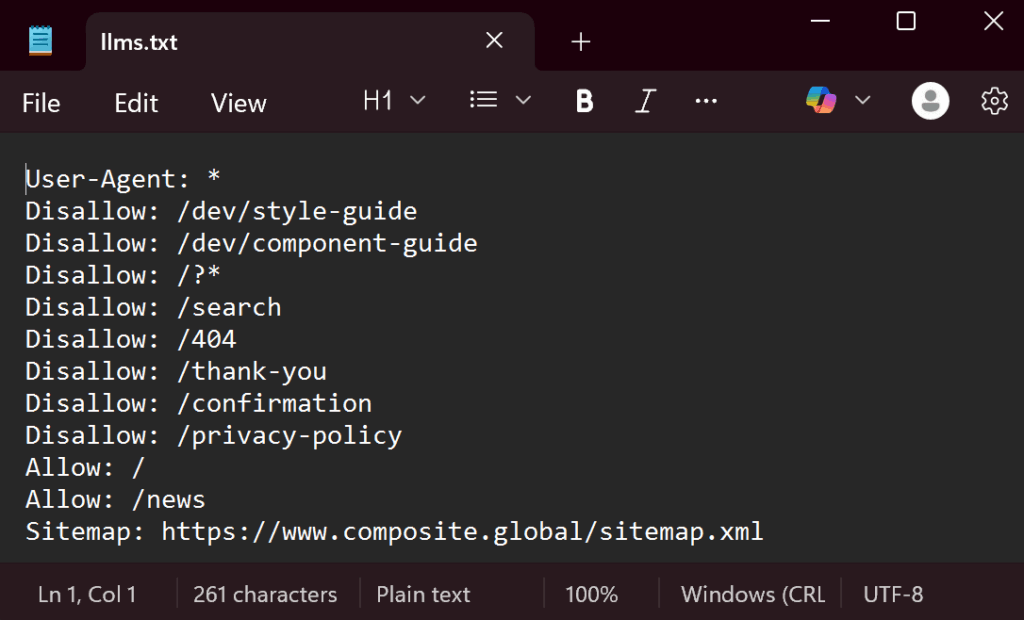
As AI assistants increasingly shape how users access information, there’s a growing push for transparency around how models interact with websites. One emerging practice, still early but gaining traction, is adding an llms.txt file. Similar to robots.txt, this file is meant to declare how site owners want AI systems to use their content.
Some brands use it to block crawlers while others use it to specify training permissions or clarify usage rights. Its adoption is in the early stages, but it represents a broader cultural shift: businesses want clarity and control over how their information enters the AI ecosystem.
For a detailed guide on generating and implementing llms.txt, read SEO for ChatGPT: How to Help LLMs Understand Your Website.
Whether or not llms.txt becomes a universal standard, the principle behind it is important. Transparency creates trust for users, regulators, and AI systems alike.
AEO Isn’t Replacing SEO, It’s Expanding It
Companies often ask whether they should focus on SEO or AEO, as if optimizing for one means sacrificing the other. But the truth is simpler: you can’t excel at AEO without good SEO fundamentals, and you can’t excel at modern SEO without embracing AEO principles.
They are two expressions of the same requirement to make your content clean, coherent, and interpretable.
If SEO built the structure of the web, AEO demands that we use that structure responsibly.
If SEO taught websites how to talk to search engines, AEO teaches them how to talk to reasoning engines.
The most future-ready brands are those that treat search visibility and AI visibility not as separate goals, but as complementary parts of a single communication strategy.
Why This Matters for Accessibility
There’s another benefit worth acknowledging: the more we optimize for AI, the more accessible the web becomes.
People who use assistive tools, like screen readers, text simplifiers, and focus modes, depend on semantic clarity and predictable structure. They benefit from headings that follow a consistent hierarchy, from descriptive link labels, from images with real alt text, and from content that explains itself without requiring prior knowledge.
These are the same signals AI models rely on.
Accessibility doesn’t sit off to the side of SEO or AEO, it sits directly underneath both, as the shared foundation. When we build for clarity, we build for everyone.
And when companies embrace accessibility not as a compliance checklist but as a communication philosophy, they create digital experiences that both humans and machines can understand effortlessly.
The Future: A Web Designed for Understanding
We’re entering a new era of digital discovery, one where websites must simultaneously speak to users, search engines, and AI assistants. But what looks like a technological challenge is actually a return to something very human: the need to express meaning clearly.
The future of visibility in search, in AI summaries, and in recommendation engines belongs to the brands that embrace clarity over complexity. Businesses that invest in structure, semantics, transparency, and accessibility will be better understood by everyone who interacts with them, whether that’s a person using a screen reader or a model generating an answer.
Optimizing for SEO helps you get found. Optimizing for AEO helps you get understood. Optimizing for accessibility helps everyone participate.
Do all three well, and you build a web presence that feels smarter, fairer, and more readable by humans and machines alike.