Grocery retail in the US is a competitive market with tight margins and changing customer expectations. As the sector changes so does supermarket POS software. Where once these systems were mainly for checkout and payment handling, smart retail systems are now a central tool to store performance that helps grocers stay competitive in a rapidly evolving market. So what exactly do they do?
This article will look at four ways modern POS software is advantageous over legacy systems. Grocery margins are tight, often 1-3% in the US, while shrink and labor costs are rising. At the same time, customers expect more – faster checkouts, competitive prices and smooth retail experiences. Faster and smarter systems help fulfill these demands while mitigating risks and easing pressure on margins, through data driven decision making, integrated workflows and efficient scalability.
Speed Matters Across Many Areas of the Business
With margins tight in the grocery sector, revenues are often driven by volume. That means speed and efficiency matters far more than in some other business sectors.
A grocery POS software solution will handle everything your store needs to run effectively and quickly, from inventory management to the customer checkout and payment processing. All tailored specifically to the grocery sector. A great provider will also offer 24/7 customer support as well as free installation and setup. Plus a full day of 1-on-1 training for staff to ensure they’re confident in the new system and understand its benefits.
A modern grocery POS system can handle high volumes of transactions at almost instant speed (from the customer’s end) and with basically no lag or downtime. In grocery settings, peak hours can get intensely busy so the speed of transactions can significantly influence throughput and store revenues.
Although customers often don’t see it until it goes wrong, fast and efficient checkouts improve long-term retention substantially. Given all this, in today’s grocery market fast payment processing is a necessity.
Smarter Systems Means Better and More Efficient Decisions
A modern retail POS system is about more than just checkout speed, although they do that very well. The payment is just the beginning in many ways. These software solutions can capture and analyze all sorts of business data and make it instantly visible for informing strategic decisions.
Older platforms often rely on batch updates, staggered reporting and even manual reconciliation with data – all of which take time and can lead to missed opportunities or mistakes.
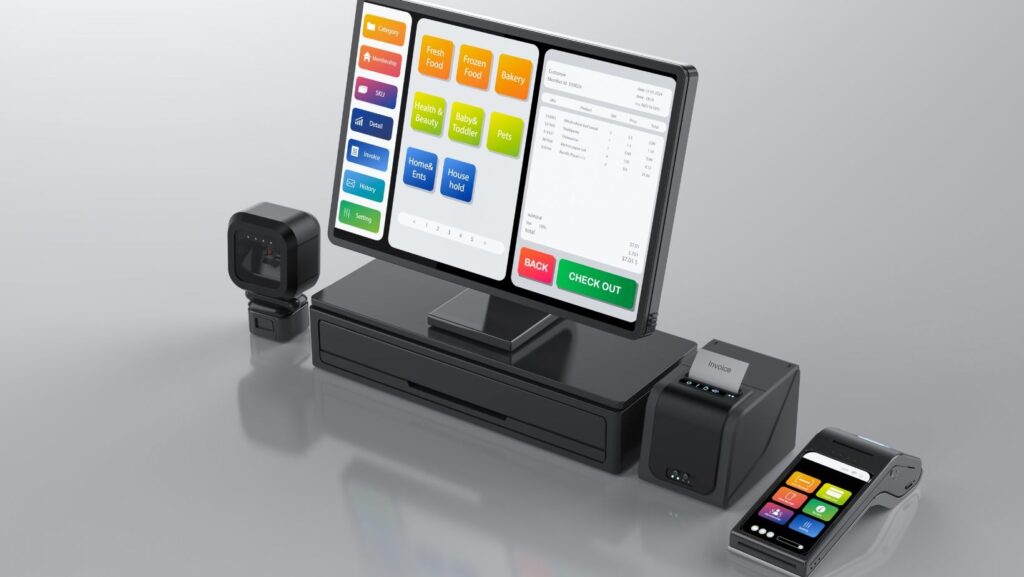
Great POS software solutions offer real-time visibility and insights into inventory turns, margins, customer purchase patterns and comparative metrics across multiple sites. Grocers can fully customize the system to stay connected and in control, at any time with mobile and desktop integration for monitoring and reporting.
In the grocery market, where margins are tight and wastage is a common problem, regular and up-to-date information on customer behaviors can prove invaluable.
Real-time system interactivity and analytics allow grocers to:
- Lessen waste through overordering on items that aren’t selling
- Optimize pricing and promotions to increase margins
- Improve demand forecasting
- Accurately track shrinkage
Integrated Systems Take Guess Work Out of Routine Grocery Operations
As well as providing data that can optimize decision making, modern software can automate the implementation of responses to the new data streams. For example, smart retail systems can automatically update stock, pricing changes and reporting, among other things.
A mismatch in pricing can cause substantial friction along the customer journey, as can being told an item is in stock but it isn’t. For owners, errors in reporting can lead to costly over restocking or under estimating demand leading to a stockout.
Automating these processes for staff helps minimize the risk of human error and saves time compared to manual reporting and pricing. This allows staff to get back on the floor to help customers with a personal touch.
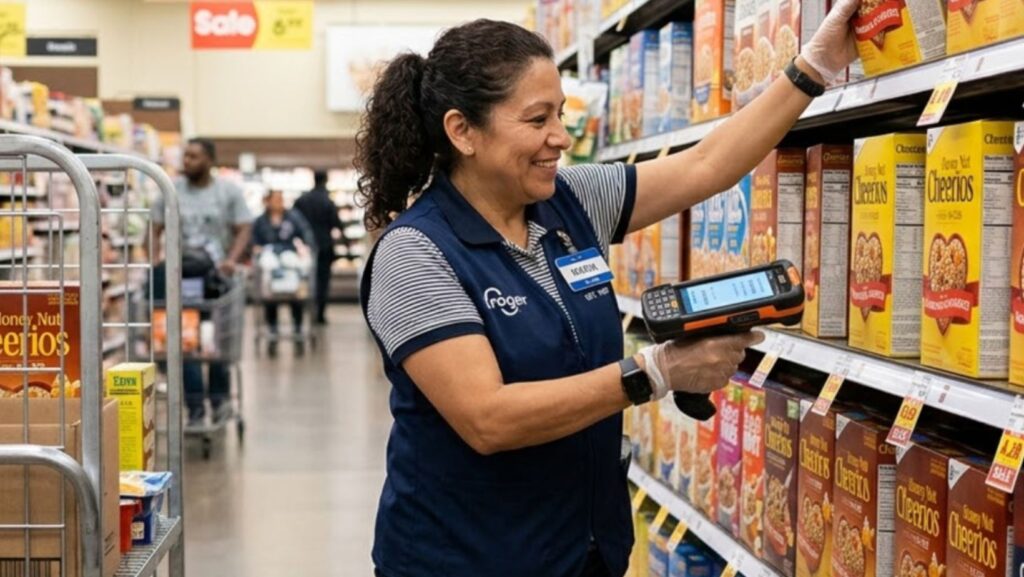
As well as automation, these systems are all about integration. Staff can use one platform to complete scanning and stock checking, reporting and checkout payments, while owners can also use the same platform for monitoring and scheduling or tinkering with automated responses. Both of which boost operational and workflow efficiency.
Future Proofing for Later Scalability
Where legacy systems can be mechanically rigid, modern platforms are centralized and based on modular software with regular updates, which has many advantages.
There is no turning back on the digital age. Retail technology trends aren’t shiny toys that will be a passing flash in the pan – they represent what customers want from a grocery experience right now, and into the future.
The future of retail POS means scalable systems that are capable of integrating with tomorrow’s technology as well as the cutting edge systems of today. Continuous updates keep these systems relevant and working with the latest innovations, ensuring flexibility while continuing to deliver efficient performance.
Grocers that upgrade retail technology today are making sure they will be able to keep up with customer demands and preferences of tomorrow. For example, today’s POS systems are capable of connecting to omni-channel retail platforms such as ecommerce operators and delivery platforms – both of which are growing segments of customer demand.
They can also be used for scalability, as deploying the system to new sites and stores is incredibly simple. Older systems can take significant infrastructure to rollout at new locations, where modern POS software providers make this easy.
Over time, being adaptable to future market conditions and growth while maintaining high standards in the now will be a significant competitive edge for any grocer.